
Join the SAFE-CITIES Participatory Model Training Module: Urban Planning Course
Join urban planning course online or in person! Pick this short course: only 2 hours with focus on the design of secure public space.


As our cities grow, so do the challenges of keeping them safe. From terrorist threats and crowd management to cyber risks and the weaponisation of everyday vehicles, modern cities face complex and evolving dangers. The SAFE-CITIES project, a European research initiative, has been tackling these challenges head-on – with a focus on prevention instead of reaction when it is too late.
Launched in November 2022 with the first meeting one month later in Genoa, SAFE-CITIES set out to develop practical, innovative tools that help security professionals make public spaces safer without closing them off. The project’s mission was to ensure cities remain open, accessible, and welcoming, while improving their resilience to today’s most pressing threats.
The main objectives of the projects included:
By collaborating with public and private entities, law enforcement, technology providers, and citizens, the project ensured a balanced and practical approach to security.
Over the course of the project, the SAFE-CITIES team developed a suite of practical, adaptable tools designed to help cities assess risks, plan safer public spaces, and prepare for unexpected threats.
At the heart of the project is the Security and Vulnerability Assessment (SVA) Framework delivered mainly by our partners from Demokritos Research Centre, allows users to analyse potential threats, select from predefined risk scenarios, and follow step-by-step recommendations for strengthening safety.
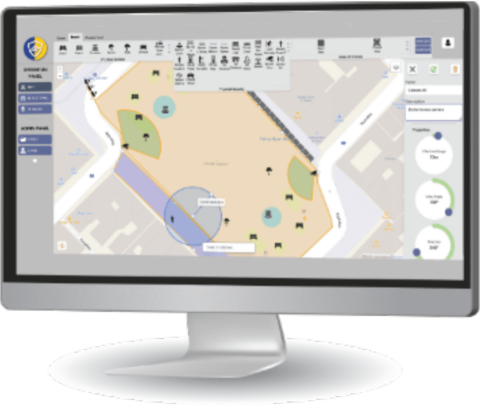
The framework is a ground for the SERVE (Security Vulnerability Assessment) Tool developed by IANUS Technologies. It is a powerful, interactive platform helping safety professionals map real public spaces, analyse their vulnerabilities, and tailor security plans to real-world locations like transport hubs, city squares, or stadiums.
Another tool developed within SAFE-CITIES project is SBS – The Scenario Builder & Serious Gaming Simulator. It is designed for protecting large-scale public events like concerts, sporting events, public demonstrations or religious gatherings, before they really begin. It allows security teams to construct detailed 3D models of event venues, providing a clear visualisation of security layouts and potential vulnerabilities. The tool was developed mainly by STAM S.r.l and D-Visor and fully cooperates with the SERVE tool and below-mentioned Dashboard.
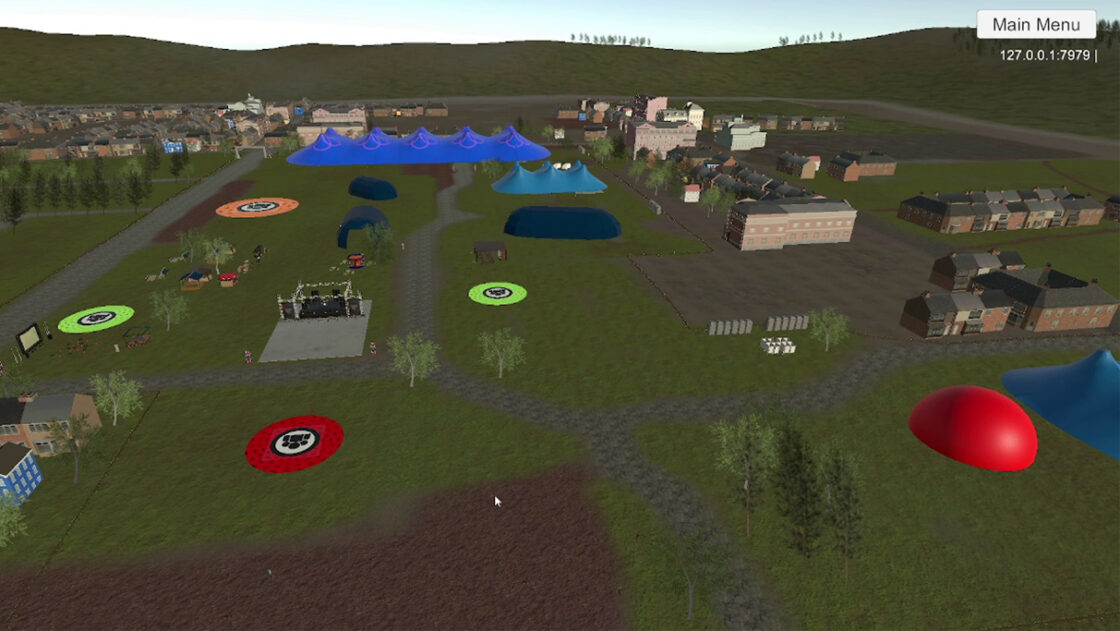
With this tool, teams can simulate various security threats, including crowd surges, drone attacks, and unattended items, in a VR-enabled environment that enhances situational awareness. SBS also supports multiplayer training exercises, helping teams improve coordination, decision-making, and real-time response strategies. As a result, security personnel can anticipate potential threats and refine their strategies, ensuring a faster, more effective reaction in real-world emergencies.
Additionally, a tool for enhancing crisis management and decision-making was designed. In any security incident, having data and clear visualisation of the situation is crucial for effective decision-making. The S&D (SCoreboard & Dashboard) tool by Thridium helps security teams make fast, informed decisions by providing live reports, data visualisation, and intuitive dashboards.
See the SAFE-CITIES Tools video overview!
The solutions were tested under real-world conditions during 4 use cases pilots. An international Hackathon in Crete, gathering IT specialists, security practitioners and students of a relevant course, also helped to validate the SVA Framework implementation and tools.
This extensive testing proved that the SAFE-CITIES tools are not just theoretical – they can work in the real world, in the complex, dynamic environments where cities need them most.
The project was led by STAM S.r.l. (Italy) and brought together strong contributions from partners across Cyprus, the Netherlands, Greece, Poland, the United Kingdom, Belgium, Slovenia, and Finland. The consortium combined expertise from local authorities (Municipality of Gorizia, Municipality of Nova Gorica), law enforcement agencies, security forces and related public bodies (Finnish Police, Cyprus Ministry of the Interior, Slovenia Ministry of the Interior, Polish Provincial Police Headquarters in Gdańsk, Red Cross Gorizia), technology providers (STAM S.r.l., IANUS Technologies, D-Visor B.V., Thridium Ltd), researchers (University of Bologna, National Centre For Scientific Research Demorktios, Institute of International Sociology of Gorizia, Università Verde di Bologna APS), social organisations, and institutions working with security practitioners (Confederation of European Security Services, Polish Platform for Homeland Security), ensuring a well-rounded and practical approach to urban security. This diverse, Europe-wide partnership ensured that the solutions are adaptable and relevant across a variety of local and national contexts.
The SAFE-CITIES project came to an end with the last day of June 2025 and a great opportunity to showcase the results during the Final Review meeting with the European Commission representatives.
The developed tools are ready to support cities, security professionals, and decision-makers across Europe. We are excited to continue our journey and help you in making Europe safer.
If you are interested in the project’s results, please contact us through the contact form.